
HUNTINGTON BEACH, CA – As a partner in Peckar & Abramson’s Los Angeles office, Elaine Y. Lee appreciates being brought into a dispute at early stages. It’s a time when she and in-house counsel can set the strategy for how to resolve a dispute instead of responding to claim or lawsuit deadlines.
Lee and two other west coast-based legal leaders from nationwide contractors will discuss how their companies approach contract review, claims development, mediation, and litigation strategy when Construction Super Conference convenes Dec. 1-3 in Huntington Beach, Calif. Third Thursday sat down with Lee to discuss the most effective ways to work with in-house counsel, while also offering a preview of her CSC panel discussion.
Third Thursday: What’s an example of how you worked with in-house counsel to resolve a dispute?
Elaine Lee: In several recent instances, in-house counsel engaged me as soon as there were hints of a brewing dispute and we worked together to assess the facts, the history between the parties, the contract’s dispute resolution procedures, and the legal risks and anticipated costs to evaluate the best path forward. In some cases, just a demand letter and involvement of outside counsel helped the project team make enough headway to close out the project. In other cases, we set up early mediation and settled without incurring too much in fees or headaches.
Third Thursday: What is the typical nature of your interactions with in-house counsel?
Elaine Lee: My goal is to serve in whatever capacity is most helpful to the particular in-house counsel I’m working with. Sometimes that means taking on the role of a confidant, second pair of eyes as we work through legal issues together; other times that means playing the part of the litigator, ready to threaten legal action while giving space to the in-house counsel to work with the project team to resolve the dispute. In all cases, I try to determine what in-house counsel needs from me that will push the dispute toward the desired outcome.

Third Thursday: When working with owners and general contractors (and their in-house counsel), what are some of your strategies for resolving disputes?
Elaine Lee: Beyond just understanding the immediate facts of the dispute, I always want to know about the relationship between the owner and general contractor, the history of conflict resolution and negotiations during the project, whether there are concerns for preserving the future business relationship, and whether there are avenues for discussion between executives. These relationship factors are key to picking the right strategy for the particular dispute and may be how to resolve the dispute as quickly and painlessly as possible.
Third Thursday: Which “triers of fact” do you prefer and why?
Elaine Lee: Having recently completed my first jury trial, I now see that each venue/trier of fact has its advantages depending on the case and the client’s goals. Juries can award the type of victory that you may not get with a trier of fact that sees all the nuances of a case! That being said, I do believe that arbitrations with a panel of arbitrators experienced in construction law have many benefits to contractors in keeping disputes confidential, limiting discovery and motion practice, and ensuring that the triers have the capability and inclination to understand more technical aspects of a construction claim.

Third Thursday: What are some of the uncertainties in today’s world that make your work difficult?
Elaine Lee: The uncertainties impacting our construction clients, such as with technological advancements, variability in costs, and labor shortages, also mean that we as outside counsel need to stay adaptable in how we resolve disputes. As clients’ business priorities, cost structures, and tolerances change, I do my best to stay up to date and informed so that I can give the most effective, useful advice.
Third Thursday: What’s your level of optimism when it comes to use of AI in your work?
Elaine Lee: Definitely optimistic as I’ve found AI to be a fantastic tool, especially in handling detailed information identification/consolidation tasks. Ultimately AI cannot replace the human brain’s ability to factor in tangible and intangible factors to come up with the ‘right’ solution.
Third Thursday: Why are in-person conferences such as CSC still valuable?
Elaine Lee: I truly believe that the right solution to a legal dispute must take into account intangible factors such as relationships, personalities, risk tolerances, and human unpredictability. That’s why in-person conferences where you’re meeting, learning from, being challenged by, and strengthening bonds with other humans who will are/will be clients, adversaries, triers of fact, colleagues, etc. are still so valuable.
 Third Thursday: How did you come to the specialty of construction law?
Elaine Lee: I happily stumbled into construction law as a young attorney working in general commercial litigation when I was pulled into a dispute concerning what was Los Angeles’ hottest new modern art museum at the time. It was such a fun, uniquely challenging case, and I loved the team I was working with. From then on I began devoting more and more of my practice to representing contractors and now do so almost 100% of the time.
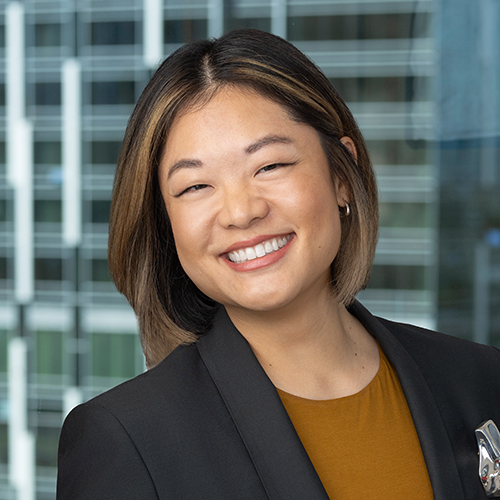
Elaine Y. Lee is a partner in Peckar & Abramson’s Los Angeles office. She concentrates her practice on construction litigation and dispute resolution and brings experience advising construction clients on California legal issues.